
UCL (Tommy John) Injuries
& Treatment

UCL Injury Overview
Dr. Eskew is a fellowship-trained sports medicine surgeon with particular expertise in UCL injuries, commonly known as Tommy John injuries, having cared for elite throwing athletes as a team physician for the New York Mets. The UCL is put under enormous stress with every throw, which is why these injuries are so common among pitchers and overhead athletes, and why getting the diagnosis and treatment right matters so much for your ability to return to the mound.
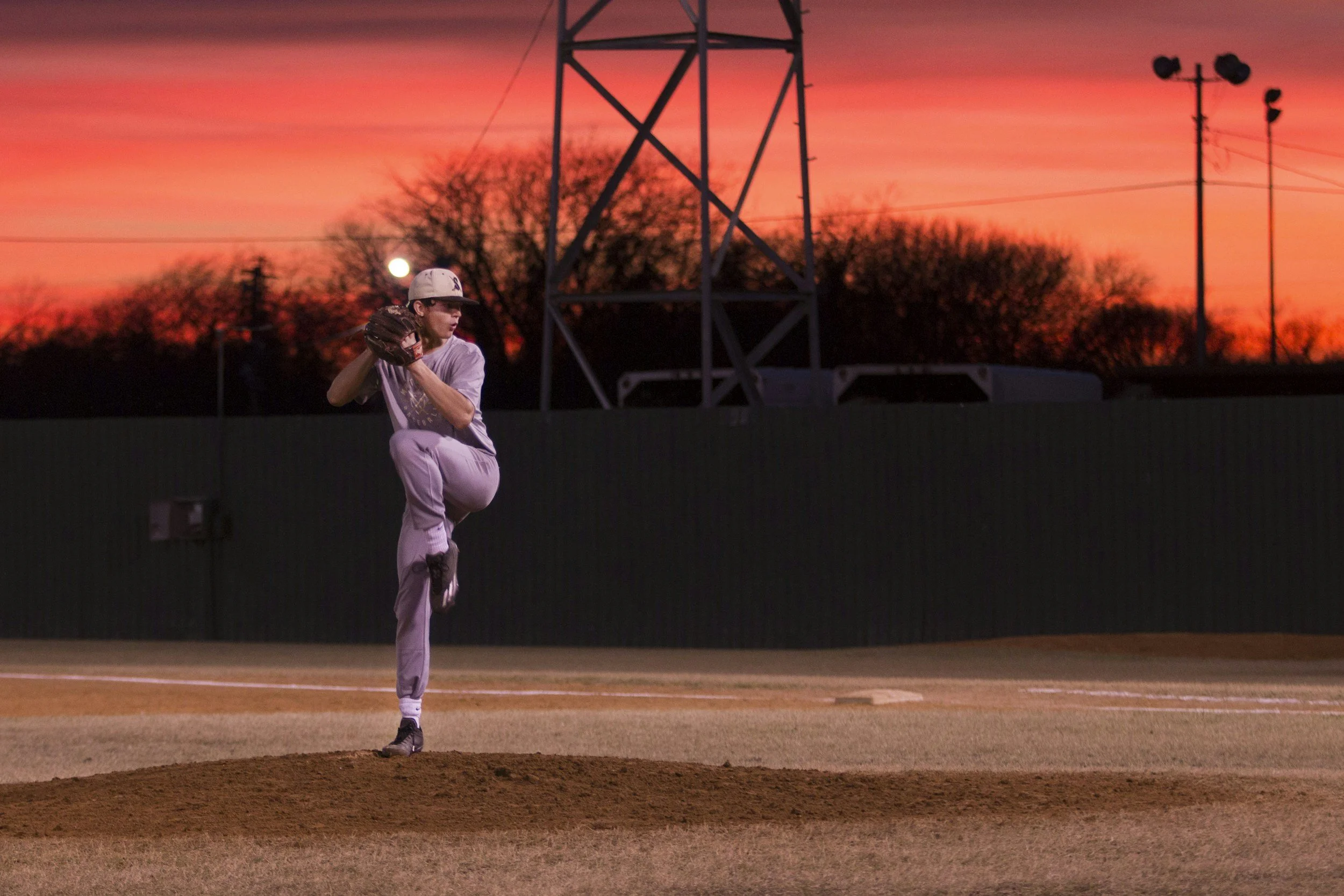
Throwing Elbow Conditions and Treatment
Elbow pain can affect everything: your ability to throw, your season, your day-to-day life. Dr. Eskew is here to find the cause, relieve the pain, and get you back on the mound.
-
A partial tear of the ulnar collateral ligament (UCL) is one of the most common injuries in throwing athletes, especially baseball pitchers. The UCL stabilizes the inside of the elbow against the stress of throwing, and repetitive strain can cause it to partially tear rather than rupture completely. Not every partial tear requires surgery. For lower-grade injuries, a structured nonoperative program is often a reasonable first step.
Common signs and symptoms include:
Pain on the inside of the elbow, especially when throwing
Decreased throwing velocity or control
A sense of looseness or instability in the elbow
Tingling or numbness in the ring and small fingers
Symptoms typically worsen with throwing and ease with rest. Nonoperative treatment combines rest, physical therapy, and a gradual return-to-throwing program over several months. In studies of professional pitchers, return-to-play rates after nonoperative treatment for partial tears have ranged from 66 to 100%, depending on tear severity.
Dr. Eskew evaluates the grade and location of your tear to determine whether nonoperative care or surgical reconstruction gives you the best chance at a lasting return.
-
UCL repair is a surgical option for athletes with a UCL tear where the ligament tissue itself is still healthy enough to repair, rather than needing to be replaced. Using internal augmentation (a strong suture with collagen that reinforces the repaired ligament), this technique restores stability while the ligament heals, without the need for a tendon graft. It's typically reserved for avulsion-type tears or younger athletes with good ligament quality, as opposed to chronic, degenerated tears better suited to reconstruction.
Athletes who may be candidates for UCL repair often have:
A specific, identifiable injury (rather than gradual, degenerative elbow pain)
Medial elbow pain and instability that hasn't improved with rest and rehab
Imaging showing a UCL tear with preserved ligament tissue, rather than a chronically damaged ligament
The main advantage of repair over reconstruction is recovery time. Newer repair techniques of UCL repair with augmentation have shown return-to-play rates greater than 95%, with one study of professional players finding 93.3% returned to sport in under 12 months, all at their prior level of play, compared to the 12 to 18 month recovery typically needed after reconstruction. Recent comparative research has found that outcomes and return-to-sport rates after repair are statistically similar to reconstruction, with a significantly shorter recovery time.
Not every UCL tear is a candidate for repair. Dr. Eskew evaluates the location, pattern, and quality of your tear to determine whether repair or reconstruction gives you the better long-term outcome.
-
UCL reconstruction, widely known as Tommy John surgery, replaces a torn or insufficient ulnar collateral ligament with a tendon graft, restoring the elbow's ability to withstand the stress of throwing. It remains the gold standard for throwing athletes with significant UCL tears or ligaments too damaged to repair, and it's one of the most well-studied procedures in sports medicine, thanks in large part to decades of outcomes data from professional baseball.
Athletes typically pursue UCL reconstruction when they have:
A complete UCL tear or chronic, degenerated ligament tissue
Medial elbow instability that limits throwing velocity and control
Failed nonoperative treatment or UCL repair
Recovery from UCL reconstruction is a significant commitment, generally around a year, with professional pitchers typically returning to their prior level of play between 17 and 20 months after surgery. The outcomes, though, are well established. Studies of professional pitchers report an 83% return-to-play rate at the MLB level, and return to the same level of play has been reported between 71% and 87% across multiple studies. Success depends on more than the surgery itself. Graft choice, surgical technique, and a properly structured rehabilitation program all play a role in outcomes.
Dr. Eskew walks you through your specific tear pattern, timeline, and throwing goals to build a reconstruction and recovery plan suited to getting you back to the mound at your best.
-
The flexor pronator muscles, located on the inside of the forearm, help stabilize the elbow against the same valgus stress placed on the UCL during throwing. A flexor pronator strain is an injury to these muscles or their tendon origin, and while it's uncommon in the general population, it's a well-recognized cause of medial elbow pain in pitchers and other throwing athletes. Because it produces pain in the same area as a UCL injury, it can be difficult to distinguish between the two without a careful exam and imaging.
Common signs and symptoms include:
Pain on the inside of the elbow, often tied to a specific throw or the result of gradual overuse
Pain that worsens with gripping or forearm rotation
Tenderness near the bony bump on the inside of the elbow
Weakness or a pulling sensation when throwing with velocity
Most flexor pronator strains improve with rest, ice, and physical therapy, without the need for surgery. Most non-surgical cases return to full sport within 8 to 12 weeks once strength and throwing mechanics are symmetrical again. Surgery is reserved for the less common cases involving a complete tendon tear or rupture off the bone.
Because a flexor pronator strain can overlap with, mask, or even contribute to a UCL injury, Dr. Eskew evaluates the elbow thoroughly, often with MRI in higher-level throwers, to make sure the ligament itself isn't also involved before building your recovery plan.
-
The capitellum, part of the elbow joint on the outer side, can develop cartilage damage from the repetitive compressive forces of throwing. In younger children (typically under age 10), this shows up as Panner disease, a self-limited condition affecting the immature capitellum that generally resolves on its own with activity modification. In adolescent throwers and gymnasts, a related but distinct condition, osteochondritis dissecans (OCD) of the capitellum, can develop, in which a piece of cartilage and underlying bone begins to separate from the joint surface. Unlike Panner disease, OCD doesn't always resolve without treatment and can require surgery if it progresses.
Common signs and symptoms include:
Pain on the outer side of the elbow, often worsened by throwing or weight-bearing activities
Stiffness or a loss of full range of motion
Catching, locking, or clicking within the joint
Swelling around the elbow
Treatment depends on whether the lesion is stable or unstable. Stable lesions are often managed with rest and activity modification and monitored over time. Unstable lesions, or those that don't improve with rest, may require surgery, ranging from arthroscopic debridement and microfracture to cartilage restoration procedures for larger defects. Outcomes for surgically treated capitellar OCD are strong: return-to-sport rates for overhead athletes have been reported as high as 89% and even higher for return to any sport.
Because early, accurate diagnosis significantly affects long-term outcomes, especially in young throwers, Dr. Eskew evaluates the size, location, and stability of the lesion to determine the treatment path most likely to protect your elbow long term.
-
Little league elbow, also known as medial epicondyle apophysitis, is the most common elbow injury in young throwers. Unlike UCL injuries in older athletes, this is a growth plate injury. In children and adolescents, the growth plate on the inside of the elbow is still developing and is significantly weaker than the surrounding ligaments and muscles, which makes it the most vulnerable point to repetitive throwing stress. It's most common in pitchers ages 9 to 14, but can affect any young athlete who throws frequently.
Common signs and symptoms include:
Pain on the inside of the elbow, typically during or after throwing
Decreased throwing velocity, distance, or accuracy
Swelling or tenderness over the growth plate
Difficulty fully straightening the elbow
The good news is that little league elbow is highly preventable and, when caught early, responds well to treatment. The most important step is rest from throwing for a period of weeks to allow the growth plate to heal, along with physical therapy to build strength and correct any mechanical issues contributing to the stress. Left untreated, repetitive throwing through pain can cause the growth plate to separate further, which is why early evaluation matters.
Dr. Eskew works with young athletes and their families not just to treat the injury, but to build a safe return-to-throwing plan and pitch count guidance to help protect against re-injury going forward.
-
Valgus extension overload (VEO) is a common cause of posterior elbow pain in throwing athletes, caused by repetitive impact between the olecranon and its groove at the back of the elbow during the follow-through phase of throwing. Over time, this repetitive impact leads to bone spurs (osteophytes) that limit full extension and cause pain, and at times catching or locking within the joint.
Common signs and symptoms include:
Pain at the back of the elbow, especially at the end of the throwing motion
Loss of full elbow extension
Catching, locking, or a sense of blockage in the joint
Pain that worsens with continued throwing, particularly with high pitch counts
VEO often responds initially to rest, activity modification, and physical therapy focused on throwing mechanics. When symptoms persist or the bone spurs continue to limit motion, elbow arthroscopy allows for minimally invasive removal of the impinging osteophytes and treatment of any related cartilage damage or loose bodies in the joint. Return to throwing after arthroscopic treatment has been reported in most athletes, with the majority returning to their prior level of competition, though outcomes depend on the extent of the underlying joint changes.
Dr. Eskew evaluates the full throwing elbow, since VEO can sometimes overlap with other throwing injuries, to make sure your treatment plan addresses the complete picture, not just the area causing pain.
-
The ulnar nerve runs directly behind the medial elbow, close to the same structures stressed during throwing, which makes it particularly vulnerable to irritation in overhead athletes. Repetitive valgus stress, inflammation from nearby ligament or muscle injuries, or simple anatomic vulnerability can lead to ulnar neuritis, a condition where the nerve becomes irritated or compressed. Left untreated, this can affect not just comfort, but grip strength and hand function.
Common signs and symptoms include:
Tingling or numbness in the ring and small fingers
Pain along the inside of the elbow that may radiate down the forearm
A sense of weakness or clumsiness in the hand, particularly with grip
Symptoms that worsen with throwing or prolonged elbow flexion
Many cases of ulnar neuritis improve with rest, activity modification, and physical therapy aimed at reducing irritation around the nerve. When symptoms persist despite conservative treatment, or when nerve compression is significant, ulnar nerve decompression, and in some cases transposition (repositioning the nerve to a more protected location), can relieve pressure and restore normal nerve function. Return to throwing after ulnar nerve surgery is generally successful, with low rates of needing a second surgery on the nerve itself.
Because ulnar nerve symptoms often overlap with other throwing elbow injuries, particularly UCL problems, Dr. Eskew evaluates the entire elbow to be sure the nerve is the true source of your symptoms before building your treatment plan.
-
Getting cleared to throw again isn't the same as being ready to pitch a full game or play a full nine innings. Returning too quickly, or with the wrong progression for your position, is one of the most common causes of reinjury in throwing athletes. Return to throwing programs are structured, gradual progressions designed to rebuild strength, distance, and intensity safely, using real workload data rather than a one-size-fits-all timeline.
These programs are tailored to your sport and position, since the demands on the arm vary significantly:
Pitchers progress from flat-ground, long-toss throwing to mound work, with volume and intensity built up in careful stages before returning to competitive pitch counts
Position players (infielders, outfielders, and catchers in baseball, or the comparable positions in softball) follow a program built around the throwing distances, frequency, and intensity specific to their role
Softball athletes follow programs designed around the differences in throwing distance, mechanics, and game demands compared to baseball
Progression is guided by objective benchmarks and monitored soreness, not just a calendar
When you see Dr. Eskew, you won't get a generic handout. You'll get a throwing program built on established, evidence-based protocols and tailored specifically to your injury, your sport, and your position, so your path back to the field is built around your unique situation, not someone else's.