Frequently Asked Questions
WHAT MAKES OUR PRACTICE DIFFERENT?
Our practice was built around a simple philosophy: treat patients the way we would want our own family treated. Dr. Eskew is one of only two orthopedic surgeons in all of South Carolina to complete fellowship training at Hospital for Special Surgery, widely recognized as the #1 orthopedic hospital in the world, bringing that level of specialized care back to South Carolina. With experience caring for athletes at all levels, including professional athletes, our practice remains focused on compassionate, patient-first care and helping patients return to the activities that matter most to them.
DO I ALWAYS NEED SURGERY ON MY SHOULDER, KNEE OR ELBOW PAIN?
Not always. Our practice strongly emphasizes nonoperative treatment as the first step whenever appropriate, including physical therapy, activity modification, injections, and other conservative treatments. Surgery is only recommended when necessary, with the goal of creating the treatment plan that best aligns with each patient’s symptoms, lifestyle, and long-term goals.
DO YOU TREAT PATIENTS OF ALL AGES?
Yes. We care for athletes and individuals of all ages: from pediatric and high school athletes to collegiate, professional, recreational, and older adult patients looking to maintain an active lifestyle and independence. Every patient receives the same thoughtful, compassionate, and personalized approach to care.
Our practice specializes in the comprehensive care of shoulder, elbow, and knee conditions including rotator cuff tears, shoulder instability, ACL injuries, meniscus tears, arthritis, cartilage injuries, and throwing-related injuries. We have a special interest in caring for overhead and throwing athletes, with expertise in conditions affecting baseball, softball, tennis, volleyball, and other overhead sports. In addition to sports injuries, we also provide advanced care for complex shoulder conditions, joint preservation procedures, and arthritis affecting patients of all ages and activity levels.
WHEN SHOULD I SEE AN ORTHOPEDIC SPORTS MEDICINE SPECIALIST?
Patients should consider seeing an orthopedic sports medicine specialist if pain persists despite rest, limits activity, causes weakness or instability, or interferes with sports, exercise, work, or daily life. Early evaluation by a shoulder, elbow, and knee specialist can often help prevent worsening injury, shorten recovery time, and improve long-term outcomes. Our practice provides comprehensive orthopedic and sports medicine care for athletes and active patients throughout South Carolina.
WHAT ARE THE SYMPTOMS OF A SHOULDER LABRAL TEAR?
Patients with a shoulder labral tear may experience deep shoulder pain, clicking or catching sensations, instability, or weakness. Symptoms are especially common in throwing athletes, weightlifters, and patients with prior shoulder dislocations or repetitive overhead use.
Many labral tears improve with physical therapy, activity modification, and other conservative treatments focused on restoring shoulder stability and mechanics. Early evaluation by a shoulder specialist can help determine the severity of injury and the best treatment plan to safely return patients to sports, exercise, and daily activities.
MY SHOULDER REPLACEMENT HURTS. DOES IT NEED TO BE REVISED?
First, we are sorry you are dealing with this. Persistent pain after shoulder replacement can be frustrating, stressful, and limiting, but it is not uncommon and does not always mean another surgery is necessary. Many patients improve with a careful evaluation, physical therapy, injections, medication management, or other nonsurgical treatments depending on the underlying cause of pain.
A detailed assessment by a shoulder replacement specialist is important to determine why the shoulder is painful and whether revision surgery is truly needed. Dr. Eskew has specialized training in complex and revision shoulder surgery, including painful shoulder replacements, stiffness, instability, rotator cuff failure, implant loosening, and other shoulder arthroplasty complications.
WHAT ARE TREATMENT OPTIONS FOR CARTILAGE INJURIES IN THE KNEE?
Cartilage injuries of the knee can cause pain, swelling, mechanical symptoms, and difficulty with sports and activity, particularly in younger and active patients. Treatment options may include nonsurgical management, biologic treatments, cartilage restoration procedures, cell-based cartilage repair techniques, osteochondral autograft or whole tissue osteochondral allograft transplantation, and realignment procedures such as osteotomies when appropriate.
Dr. Eskew specializes in individualized cartilage restoration and joint preservation strategies designed to restore knee function, reduce pain, and help delay the progression of arthritis whenever possible.
WHAT CONDITIONS DO WE COMMONLY TREAT?
WHAT CAN I EXPECT DURING MY FIRST VISIT?
We understand that dealing with an injury or ongoing pain can be stressful, overwhelming, and disruptive to daily life, work, family, and the activities you enjoy most. Your first visit is designed to be collaborative, thorough, and patient-focused. Our goal is to take time to understand your symptoms, goals, and prior treatments before developing a personalized treatment plan together, and you can expect to leave the office with a clear and cohesive plan focused on helping you feel better, restore function, and return to the activities that matter most to you.
DOES DR. ESKEW SEE OVERHEAD AND THROWING ATHLETES?
Yes. Dr. Eskew has extensive experience caring for overhead and throwing athletes at all levels, including professional, collegiate, high school, and youth athletes. Dr. Eskew has operated on baseball players ranging from high school prospects to professional athletes and previously served as a team physician for the New York Mets. He currently serves as a team physician for the Hub City Spartanburgers, Clemson Tigers baseball, and Presbyterian College Blue Hose.
Dr. Eskew has a special clinical and research interest in shoulder and elbow injuries affecting throwing athletes, including Tommy John surgery, and performance-related throwing conditions. He has authored multiple research publications in this field and is actively involved in collaborative projects with the Major League Baseball Physicians Association focused on injury prevention, treatment optimization, and improving outcomes for baseball players and overhead athletes.
HOW DO IF I KNOW I TORE MY ROTATOR CUFF?
Common symptoms of a rotator cuff tear include shoulder pain, weakness, difficulty lifting the arm, nighttime pain, and pain with overhead activities. Rotator cuff tears also become increasingly common as we get older, and many patients may have partial or even full-thickness tears without ever realizing it.
Because not every rotator cuff tear requires surgery, our practice strongly emphasizes conservative treatment first whenever appropriate, including physical therapy, activity modification, anti-inflammatory treatments, and injections. A detailed evaluation and imaging such as MRI can help determine the severity of injury and whether nonsurgical treatment or surgery is the best option for restoring function and relieving pain.
I TORE MY ACL. WHY CHOOSE DR. ESKEW TO DO YOUR ACL SURGERY?
Dr. Eskew specializes in the treatment of complex sports knee injuries with advanced fellowship training at Hospital for Special Surgery, widely recognized as the #1 orthopedic hospital in the world. During his training, Dr. Eskew worked alongside and trained under many of the leaders and innovators in ACL surgery while caring for athletes at one of the highest-volume sports medicine centers in the country, where thousands of ACL reconstructions are performed each year.
Dr. Eskew’s approach to ACL recovery emphasizes accelerated, evidence-based rehabilitation focused on restoring strength, motion, balance, confidence, and athletic performance as safely and efficiently as possible. Rather than relying on outdated or overly restrictive rehabilitation protocols, treatment plans incorporate the most current sports physical therapy principles, return-to-play testing, recovery technology, and performance-based training strategies designed to help patients safely return to sports and activity at a high level.
WHAT ARE TREATMENT OPTIONS FOR KNEE ARTHRITIS?
Many patients with knee arthritis can improve with physical therapy, injections, bracing, activity modification, biologic treatments, and other conservative measures before surgery is considered. When symptoms become severe and begin interfering with quality of life, more advanced treatment options may be recommended.
Our practice offers both robotic-assisted partial knee replacement and total knee replacement with treatment individualized based on the severity and location of arthritis, activity level, anatomy, and patient goals. The goal is to relieve pain, restore function, and help patients safely return to an active lifestyle.
HOW DO YOU PERSONALIZE TREATMENT FOR EACH PATIENT?
No two patients are exactly the same. Treatment recommendations are individualized based on factors such as age, activity level, sport, anatomy, imaging findings, lifestyle, medical history, and long-term goals. Our practice emphasizes a comprehensive approach to orthopedic care, utilizing advanced imaging, evidence-based rehabilitation protocols, biologic treatments, 3D surgical planning, and modern surgical techniques when appropriate.
Whether caring for a young athlete hoping to return to competition, an active adult looking to stay healthy and active, or an older patient focused on maintaining independence and quality of life, our goal is to create the best possible treatment plan tailored specifically to each individual patient.
WHAT IS TOMMY JOHN SURGERY AND WHO NEEDS IT?
Tommy John surgery, also known as UCL reconstruction, is a procedure used to reconstruct the ulnar collateral ligament (UCL) of the elbow in athletes with significant ligament injury. It is most commonly performed in baseball pitchers and throwing athletes experiencing elbow pain, instability, loss of velocity, or decreased performance that has not improved with rest, physical therapy, and rehabilitation.
Dr. Eskew has extensive experience caring for throwing athletes at all levels, including professional, collegiate, high school, and youth baseball players. His practice focuses on comprehensive evaluation of throwing mechanics, injury prevention, rehabilitation, and both surgical and nonsurgical treatment options to help athletes safely return to competition and long-term performance.
WHEN IS SHOULDER REPLACEMENT NECESSARY?
Shoulder replacement surgery may be recommended for patients with advanced shoulder arthritis, severe pain, stiffness, loss of motion, or difficulty with everyday activities that has not improved with conservative treatment. Many patients seek evaluation after shoulder pain begins interfering with sleep, exercise, work, or quality of life.
Dr. Eskew offers the most modern shoulder replacement techniques, including robotic-assisted and 3D-planned surgery, allow for highly personalized treatment designed to restore motion, improve function, and relieve pain. Our practice provides advanced shoulder replacement care for patients throughout South Carolina, North Carolina and North Georgia.
WHAT GRAFTS DOES DR. ESKEW USE WHEN PERFORMING ACL SURGERY?
Joshua Eskew offers multiple ACL graft options including patellar tendon, quadriceps tendon, and hamstring tendon autografts. Graft selection is highly individualized and based on factors such as age, anatomy, sport, level of competition, prior injuries, lifestyle, and long-term goals in order to provide the best possible stability, recovery, and return-to-sport outcomes for each patient.
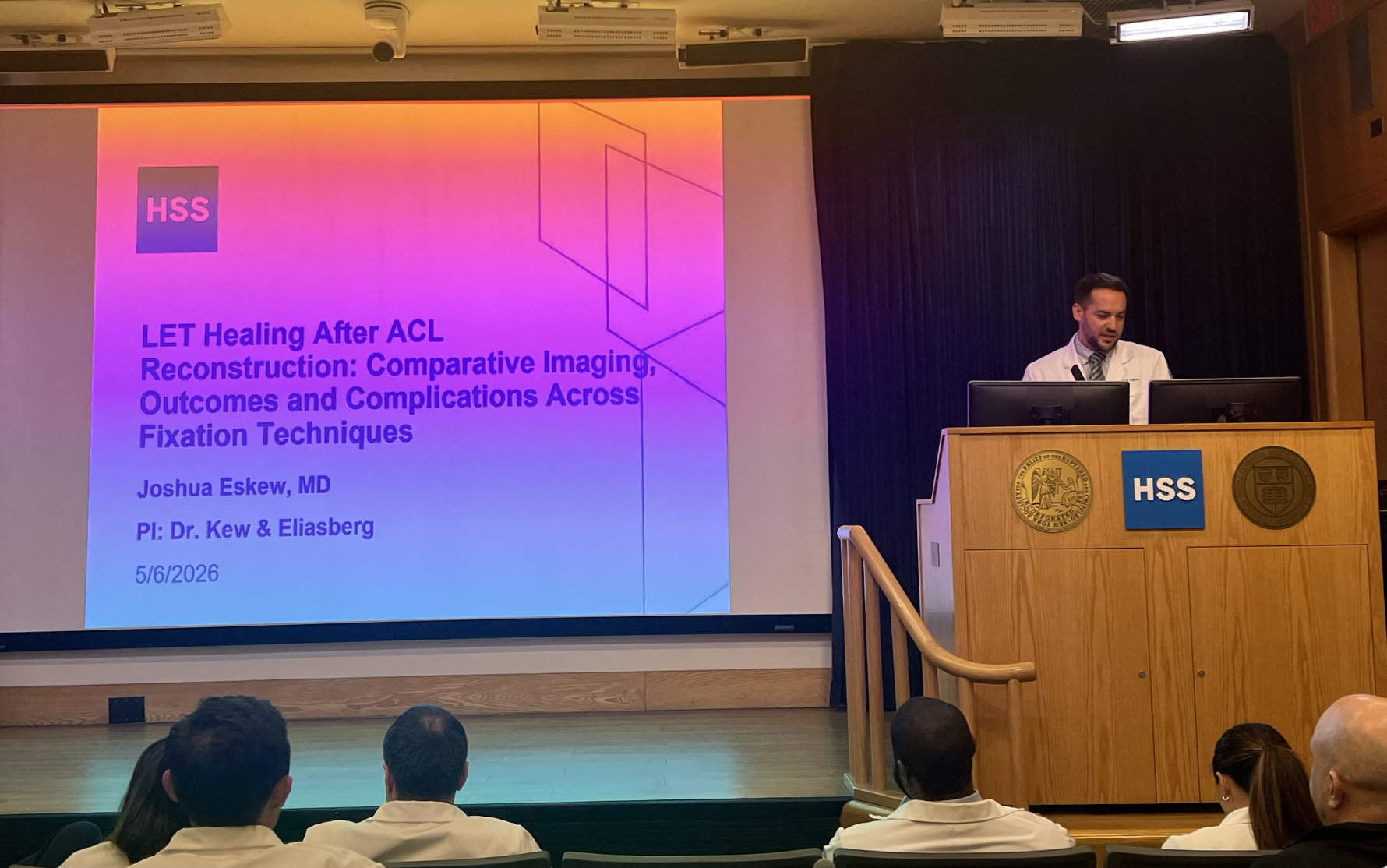
Dr. Eskew may also recommend additional procedures such as lateral extra-articular tenodesis (LET) to help improve rotational stability and reduce risk of reinjury following ACL reconstruction.
Dr. Eskew has published and presented research on ACL surgery, LET, and modern sports knee reconstruction techniques at national and international orthopedic meetings, with a special interest in advancing injury prevention, rehabilitation, and return-to-play strategies for athletes.
WHAT TYPES OF INJECTIONS AND BIOLOGIC OPTIONS ARE AVAILABLE?
Our practice offers a variety of biologic and injection-based treatments designed to help reduce pain, improve function, and support recovery from orthopedic injuries and arthritis. These options may include platelet-rich plasma (PRP), bone marrow aspirate concentrate (BMAC), corticosteroid injections, and viscosupplementation (“gel”) injections depending on the condition being treated.
Treatment plans are individualized based on each patient’s symptoms, goals, activity level, imaging findings, and overall health. Biologic therapies are often used as part of a comprehensive treatment plan alongside physical therapy, rehabilitation, and other nonsurgical treatments to help patients remain active and potentially delay surgery when appropriate.