
Elbow Conditions
& Treatment

Elbow Overview
Dr. Eskew is a fellowship-trained elbow surgeon dedicated to treating the full range of elbow conditions, including fractures, arthritis, tendonitis, tennis and golfer's elbow, ligament injuries, and instability. Some of these problems come from a single injury, others develop over time from repetitive stress and wear.
Dr. Eskew offers the full gamut of operative and non-operative solutions for elbow conditions and injuries. Treatment options can range from non-surgical treatments and therapies, such as physical therapy, NSAIDs, and injections, to surgical fixation when necessary.
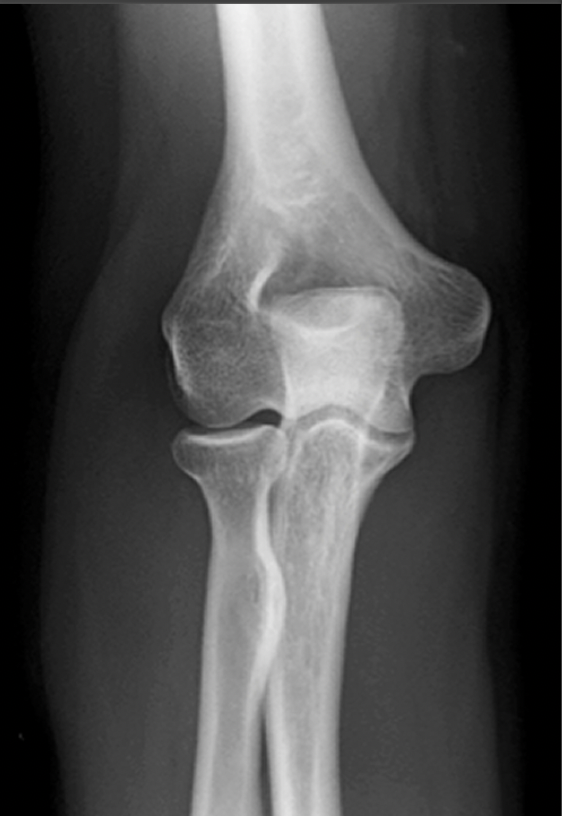
Common Elbow Conditions
Elbow pain is common, but we know it can affect everything: your work, your hobbies, your sleep and even your day-to-day life. Dr. Eskew is here to find the cause, relieve the pain, and get you back to the activities you love.
-
Tennis elbow, or lateral epicondylitis, develops when the tendons on the outer side of the elbow become damaged from repetitive use. Despite the name, it's just as common in people whose jobs or daily activities involve repetitive gripping and forearm motion as it is in athletes.
Common signs and symptoms include:
Pain or burning on the outer part of the elbow
Weak grip strength
Pain that worsens with activities like gripping a racquet, turning a wrench, or shaking hands
Occasional pain at night
Symptoms typically build gradually and worsen with continued forearm activity. The good news is that the vast majority of patients improve without surgery. Nonsurgical treatment can include activity modification, physical therapy, bracing, and anti-inflammatory measures, and most patients see meaningful relief within this course of treatment. For patients whose symptoms persist despite these initial steps, platelet-rich plasma (PRP) injections are another option Dr. Eskew offers, using your body's own healing factors to target the damaged tendon directly. For the small number of patients who don't improve with these measures, surgical options are available to address the damaged tendon tissue.
Dr. Eskew evaluates the severity and duration of your symptoms to determine the treatment most likely to get you back to full grip strength.
-
The distal biceps tendon connects the biceps muscle to the forearm bone just below the elbow, and a complete tear usually happens suddenly, often during a forceful lifting or lowering motion.
Common signs and symptoms include:
A sudden pop or tearing sensation at the front of the elbow
Immediate pain, bruising, and swelling
A visible gap or bulge in the upper arm (sometimes called a "Popeye deformity") as the muscle retracts
Noticeable weakness with elbow bending and forearm rotation, particularly turning the palm upward
For active patients, surgical repair is generally recommended, since it consistently restores more strength and function than nonsurgical treatment. Repair reattaches the tendon to the bone. Studies show a high rate of return to sport and normal activity after repair, regardless of the specific surgical technique used.
Dr. Eskew evaluates your tendon quality, timing since injury, and activity goals to determine the fixation approach best suited to getting you back to full strength.
-
The repetitive, high-velocity motion of throwing places tremendous stress on the elbow, and over time or with a single forceful throw, that stress can injure any of several structures on the inside, outside, or back of the joint. Throwing elbow injuries range from ligament and tendon strains to nerve irritation and bone spur formation, and they're common in baseball, softball, and any other overhead throwing sport.
Common signs and symptoms include:
Pain on the inside, outside, or back of the elbow, often tied to a specific point in the throwing motion
Decreased throwing velocity, control, or distance
A sense of looseness, instability, or weakness in the elbow
Tingling or numbness in the ring and small fingers
Loss of full extension or a catching sensation at the back of the elbow
Because so many different structures can be involved, from the UCL to the flexor pronator muscles to the ulnar nerve, an accurate diagnosis is the most important first step. Many throwing elbow injuries respond well to rest, targeted physical therapy, and a structured return-to-throwing program. When symptoms persist or the injury is more significant, treatment options range from minimally invasive arthroscopic procedures to ligament repair or reconstruction, depending on exactly what's injured.
Dr. Eskew has particular expertise in throwing elbow injuries, having cared for elite throwing athletes as a team physician for the New York Mets, and brings that same level of evaluation to every throwing athlete who walks through his door, from little league to college and beyond.
-
Elbow arthritis develops when the cartilage cushioning the joint wears down, whether from years of use, a prior injury, or an underlying condition like rheumatoid arthritis. It's less common than hip, knee, or shoulder arthritis, but it can be especially frustrating, since the elbow is central to so many everyday tasks.
Common signs and symptoms include:
Pain that worsens with activity or gripping
Stiffness and a loss of full range of motion
A catching, locking, or grinding sensation, often from loose bone fragments or spurs
Swelling around the joint
Pain that limits everyday tasks like lifting, carrying, or turning a doorknob
Many patients find real relief through nonsurgical care first: activity modification, anti-inflammatory medication, and injections to manage pain and improve comfort. When symptoms progress, several surgical options can help:
Arthroscopic debridement, a minimally invasive procedure that removes bone spurs, loose fragments, and inflamed tissue, often providing significant pain relief and improved motion
Osteocapsular arthroplasty, which addresses arthritis affecting both the front and back of the elbow through a similar debridement-based approach
Total elbow replacement, reserved for more advanced cases where joint-preserving surgery is no longer enough to restore comfort and function
If elbow pain and stiffness have started to hold you back from the things you want to do, it's worth having it looked at.
Dr. Eskew can help you understand exactly what's driving your symptoms and which of these options makes the most sense for your elbow and your life.
-
The triceps tendon connects the triceps muscle to the point of the elbow (the olecranon) and powers elbow extension, whether that's pushing, lifting, or straightening the arm forcefully. A triceps tendon tear is rare, but it happens most often during weightlifting, a fall, or a forceful eccentric load on the arm, such as bracing during a fall or pressing through fatigue.
Common signs and symptoms include:
A sudden pop or tearing sensation at the back of the elbow
Pain, swelling, and bruising near the tip of the elbow
Weakness or an inability to fully straighten the arm against resistance
A visible gap or defect felt at the back of the elbow
Partial tears involving less than half the tendon can often be managed without surgery, using bracing and a structured rehabilitation program. Complete tears, and partial tears involving more than half the tendon, generally require surgical repair to restore full extension strength, especially for active patients and athletes. Repair reattaches the tendon to the bone using strong suture fixation, and outcomes are excellent when treated early. Most patients return to sport in roughly five to six months, and studies show the large majority regain their full pre-injury level of activity. Because early treatment leads to better outcomes and delayed repair can make the tendon harder to reattach, timely diagnosis matters.
Dr. Eskew evaluates the extent of your tear to determine whether nonsurgical care or repair gives you the best path back to full strength.
-
Cubital tunnel syndrome occurs when the ulnar nerve, which runs along the inside of the elbow near the "funny bone," becomes compressed or irritated. It's one of the most common nerve compression conditions in the upper extremity and can affect anyone, from athletes to people who spend long hours with their elbow bent at a desk or steering wheel.
Common signs and symptoms include:
Numbness or tingling in the ring and small fingers
Pain or aching on the inside of the elbow
Weakness in the hand, especially with grip strength
Symptoms that worsen with prolonged elbow bending, such as sleeping or holding a phone
Milder cases often improve with conservative treatment, including activity modification, splinting (especially at night), and nerve-gliding exercises. When symptoms are more severe, persistent, or accompanied by muscle weakness, surgery to relieve the pressure on the nerve is highly effective. This can involve simple decompression, releasing the tissue compressing the nerve, or nerve transposition, moving the nerve to a more protected position in front of the elbow. Long-term outcomes after surgery are excellent, particularly when treated before symptoms have been present for a long time.
Dr. Eskew evaluates the severity and duration of your symptoms to determine whether conservative treatment or surgical decompression gives you the best path to lasting relief.
-
Elbow trauma most often results from a fall onto an outstretched arm, a direct blow, or a high-energy injury like a car accident or sports collision. Because the elbow is a highly congruent, load-bearing joint surrounded by important nerves and ligaments, even a seemingly straightforward fracture can affect stability and long-term function if it isn't properly diagnosed and treated.
Common types of elbow trauma include:
Radial head fractures, the most common elbow fracture in adults, typically from a fall onto an outstretched hand
Olecranon fractures, a break at the tip of the elbow, often from a direct fall onto the point of the elbow
Distal humerus fractures, breaks at the bottom of the upper arm bone involving the elbow joint, ranging from simple to highly complex patterns
Elbow dislocations, which can occur alone or alongside a fracture (sometimes called a "terrible triad" injury when several structures are involved)
Posterolateral rotatory instability (PLRI), a pattern of chronic elbow instability that can develop after a dislocation or ligament injury, causing the elbow to shift or give way during certain movements, particularly pushing up from a chair or straightening the arm under load
Common signs and symptoms include:
Significant pain, swelling, and bruising after a fall or impact
Visible deformity or an inability to fully move the elbow
A sensation of the elbow catching, shifting, or giving way (especially with PLRI)
Numbness or tingling, if nearby nerves are affected
Treatment depends on the fracture pattern, degree of displacement, and whether the joint remains stable. Many fractures, particularly less displaced radial head or olecranon fractures, can be treated without surgery. Displaced or unstable fractures often require open reduction and internal fixation (ORIF) to restore the joint surface and allow early motion. In fractures with extensive comminution that can't be reliably repaired, radial head replacement may be the better option to restore stability and function. Chronic instability from PLRI, when it doesn't respond to bracing and therapy, is treated with ligament reconstruction to restore the elbow's normal mechanics.
Dr. Eskew evaluates your specific fracture pattern, degree of instability, and functional goals to determine the treatment most likely to restore a stable, well-functioning elbow.